

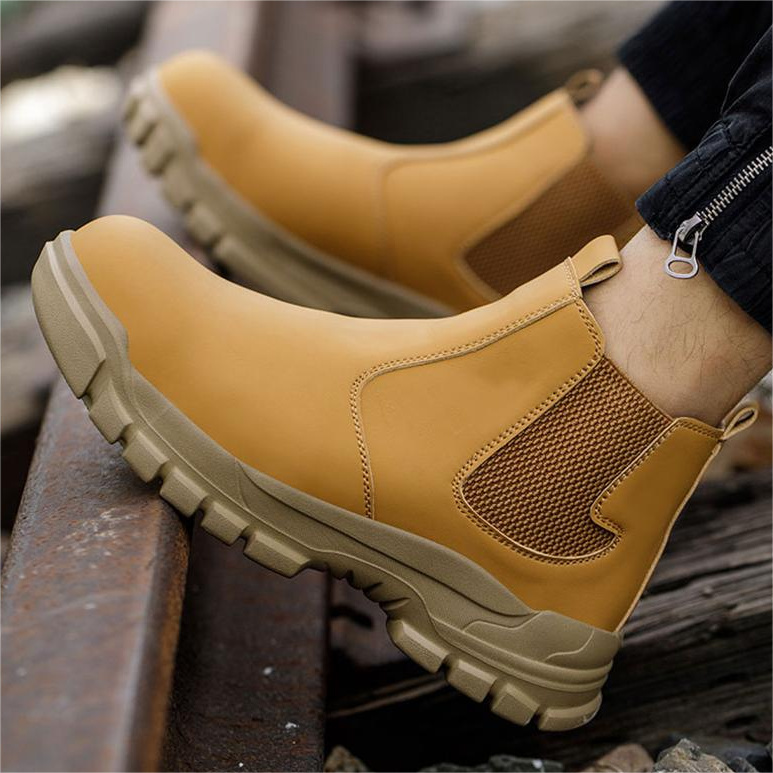
Introduction: Why Standards Matter in Safety Boots
Safety boots are not just another piece of footwear; they are a life-saving necessity in industries like construction, mining, logistics, and manufacturing. For wholesalers and distributors, sourcing from a certified safety boots manufacturer ensures that every pair of boots meets strict global safety requirements. Compliance guarantees both buyer confidence and worker protection.
Understanding Key International Standards 🌍
Safety footwear must meet different certifications depending on the market:
ASTM F2413 (USA) – Covers impact resistance, compression, puncture protection, and electrical hazard resistance.
EN ISO 20345 (Europe) – Defines categories such as SB, S1, S2, S3, including slip resistance and water penetration.
CSA Z195 (Canada) – Focuses on toe protection, sole puncture resistance, and dielectric properties.
AS/NZS 2210.3 (Australia/New Zealand) – Recognized in Asia-Pacific for protective and comfort standards.
By partnering with an experienced Safety boots Manufacturer, buyers can be confident that supplied products meet the necessary compliance benchmarks.
Testing Procedures Manufacturers Follow 🧪
To achieve certification, safety boots undergo rigorous testing, such as:
✅ Impact and Compression Tests – Verifying protection against falling objects.
✅ Slip Resistance Tests – Ensuring grip on oily, wet, or uneven surfaces.
✅ Puncture Resistance – Assessing midsole durability against sharp objects.
✅ Electrical Hazard Testing – Measuring resistance against electrical shock.
✅ Water Resistance – Checking waterproof membranes for wet environments.
This systematic testing helps manufacturers prove that each batch is compliant with international requirements.
Quality Control in Mass Production 🏭
Consistency is as important as certification. Leading factories implement:
Automated cutting and stitching systems for precision
Random sample testing during production
Batch-level quality checks before shipment
Traceable production records for accountability
For buyers, this means stable product quality across large wholesale orders, reducing risks of defective deliveries.
Customization Within Compliance 🎨
Global buyers often request branding while still meeting compliance. A professional custom boots supplier can provide:
Embossed company logos on safety boots
Branded packaging for wholesale distribution
Industry-specific designs (e.g., steel-toe for construction, anti-static for electronics factories)
Tailored comfort features like EVA insoles or breathable lining
This ensures buyers get products that are both compliant and market-ready.
Building Trust Through Certification and Communication 🤝
Reliable manufacturers maintain up-to-date certification files and share them transparently with buyers. Many also provide:
Digital test reports
Factory audit records
Compliance guarantees in supply contracts
By choosing a supplier with clear communication, buyers secure not just footwear, but a trusted long-term partner in the safety gear market.
For customized solutions, distributors often rely on a Custom boots Supplier to align branding with compliance requirements.
Conclusion: Compliance as a Business Advantage
In today’s globalized footwear market, compliance with international safety standards is not optional—it’s the core of reliability. By working with certified safety boots manufacturers, buyers can confidently serve industries that prioritize worker protection.
A compliant supplier provides peace of mind, reduces risks, and strengthens wholesale partnerships, making compliance not only a requirement but also a business advantage.