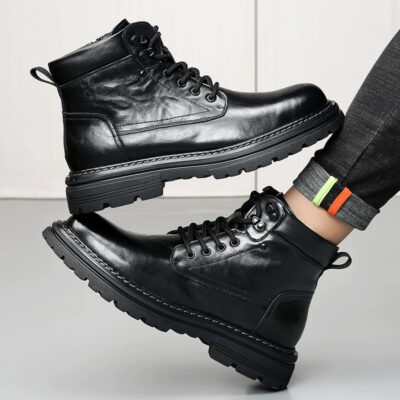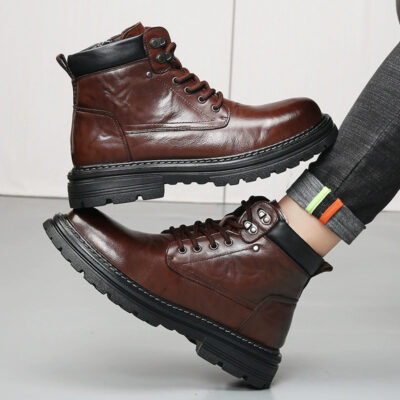


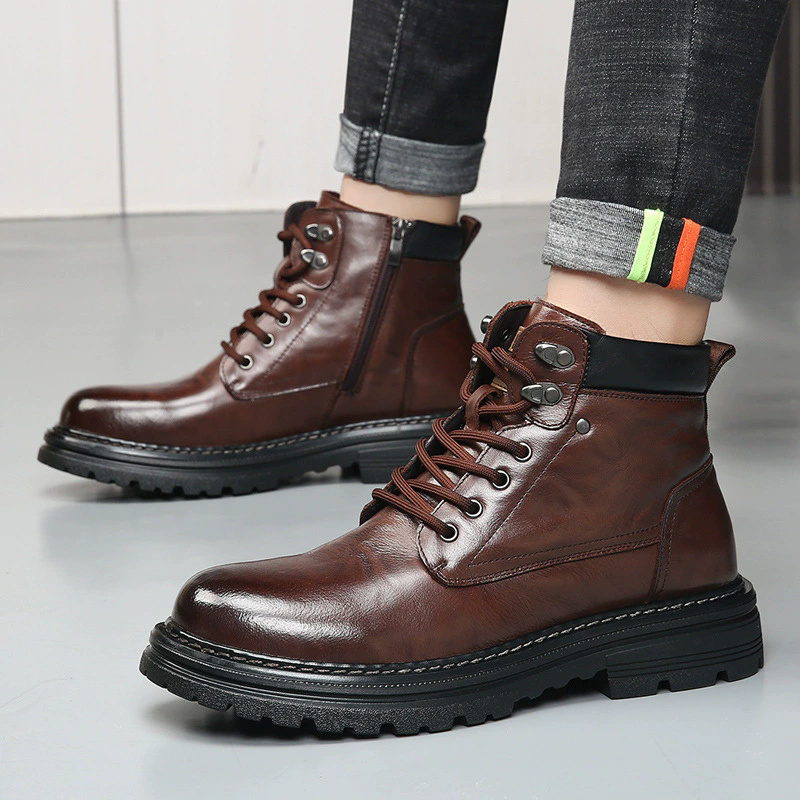
Introduction: Two Paths to Quality Boots
Leather boots have long represented durability, status, and functionality. In today’s global footwear market, buyers often compare the value of traditional craftsmanship against the efficiency of modern production. For wholesalers and distributors, partnering with the right leather boots manufacturer means balancing artistry with technology to deliver consistent, high-quality supply.
1. Traditional Craftsmanship: Heritage and Detail 🧵
Traditional bootmaking emphasizes skill, precision, and time-tested methods. Hallmarks include:
✅ Hand-cut leather for precise shaping
✅ Double or triple stitching for lasting durability
✅ Goodyear welt construction for repairability
✅ Natural tanning processes that enhance material longevity
Buyers value handcrafted boots for their heritage appeal and premium quality, making them ideal for luxury retail markets.
2. Modern Production: Efficiency and Scale 🏭
In contrast, modern factories leverage automation and technology to meet global demand. Key features include:
✅ Computer-guided cutting machines for accuracy
✅ Mass production capacity to handle large wholesale orders
✅ Advanced quality control systems at each stage
✅ Faster turnaround times for seasonal retail demand
For bulk buyers, modern production ensures consistency, scalability, and competitive pricing.
3. Comparing Strengths and Trade-Offs ⚖️
Quality – Traditional methods often yield boots with greater individuality and longevity, while modern systems ensure consistent quality across large volumes.
Cost – Handcrafted boots command higher prices; machine-assisted production reduces unit costs for wholesale buyers.
Flexibility – Modern production adapts quickly to new trends, while craftsmanship appeals to niche, premium markets.
For distributors, combining both supply channels can help capture wider customer segments.
4. The Role of Customization in Both Approaches 🎨
Whether handcrafted or machine-made, customization remains crucial. A custom boots supplier offers:
Logo embossing or debossing for branding
Specialized sole types for industrial or fashion use
Unique colors, textures, or finishes
Packaging tailored for wholesale or retail distribution
Customization ensures that retailers and wholesalers maintain brand differentiation, regardless of production style.
5. Wholesale Considerations for Global Buyers 🌍
When evaluating manufacturers, buyers should consider:
Minimum Order Quantities (MOQ) and scalability
Lead times for handcrafted vs. machine-made production
Certifications such as EN ISO, ASTM, or CSA compliance
After-sales support and warranty services
Partnering with a reliable Leather boots Manufacturer ensures flexibility in balancing both traditional and modern production strengths.
Recommended Links for Buyers 🔗
Explore heritage-inspired collections with a trusted Leather boots Manufacturer.
For branding solutions, collaborate with a Custom boots Supplier offering tailored designs.
Conclusion: Blending Tradition with Innovation
The choice between traditional craftsmanship and modern production is not about opposition—it’s about integration. Premium markets still value artisanal boots, while global wholesale markets rely on efficient production to meet volume demands.
For buyers, the best strategy is to work with suppliers who can provide both handcrafted excellence and scalable production, ensuring that every leather boot meets customer expectations while strengthening business growth.